
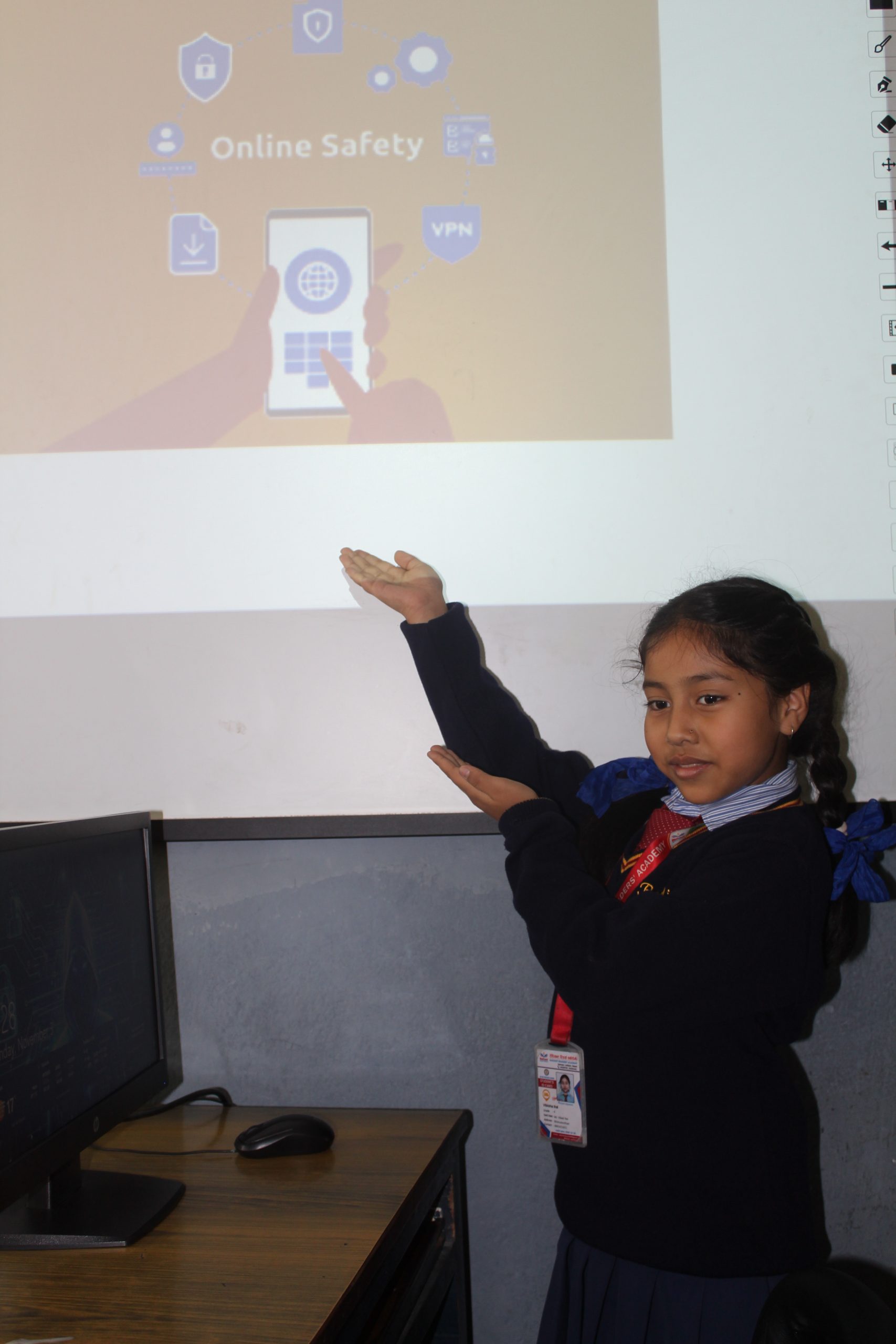
In today’s digital age, understanding cyber safety is just as important as traditional classroom subjects. With students spending increasing time online for learning, social interaction, and entertainment, it is crucial to equip them with the knowledge and skills to navigate the internet safely. At our school, an innovative approach has been adopted to teach cyber safety through interactive games, making this essential topic engaging, memorable, and practical for students.
The program began with a discussion about online safety, privacy, and responsible internet use. Teachers introduced key concepts such as recognizing secure websites, avoiding sharing personal information, identifying cyberbullying, and understanding the importance of strong passwords. Rather than relying solely on lectures, the lessons were designed to involve students actively, encouraging them to think critically about their online behavior.
Interactive games became the highlight of this learning experience. In one game, students were presented with scenarios involving email phishing, social media privacy settings, and suspicious links. They had to make choices and see the consequences of their decisions, turning abstract concepts into tangible lessons. Another activity involved a digital scavenger hunt, where students navigated safe online resources to find information while avoiding simulated online hazards. These hands-on experiences helped students internalize cyber safety practices in a fun and immersive way.
Group activities further enhanced learning. Students collaborated in teams to create posters, skits, and role-play scenarios depicting safe and unsafe online behaviors. By acting out situations such as responding to a cyberbullying message or choosing strong passwords, students reinforced their understanding and learned to empathize with others’ experiences. Peer-to-peer discussion allowed them to share personal insights and strategies, creating a supportive environment for exploring complex issues in cyberspace.
In addition to promoting knowledge, these interactive games nurtured critical thinking and decision-making skills. Students learned to evaluate risks, make informed choices, and consider the consequences of their actions online. The playful yet educational approach reduced fear or confusion about digital threats and empowered students to approach the internet responsibly and confidently.
Parents and teachers observed significant engagement and enthusiasm throughout the activities. Students who often find traditional lessons challenging were fully immersed in the interactive games, demonstrating that combining education with play can make learning highly effective. The approach also highlighted the importance of digital literacy as a lifelong skill, equipping students to protect themselves, respect others, and use technology ethically.
In conclusion, teaching cyber safety through interactive games transforms an essential but sometimes intimidating topic into an enjoyable and meaningful experience. Students not only acquire practical skills to stay safe online but also develop critical thinking, problem-solving, and responsible decision-making abilities. By integrating technology, creativity, and active participation, schools can prepare students to thrive in the digital world while fostering a culture of awareness, safety, and digital responsibility.
#CyberSafety #DigitalLiteracy #InteractiveLearning #StudentEngagement #ResponsibleInternetUse #HandsOnLearning #ActivityBasedLearning #SafeOnline #TechnologyInEducation #21stCenturySkills