
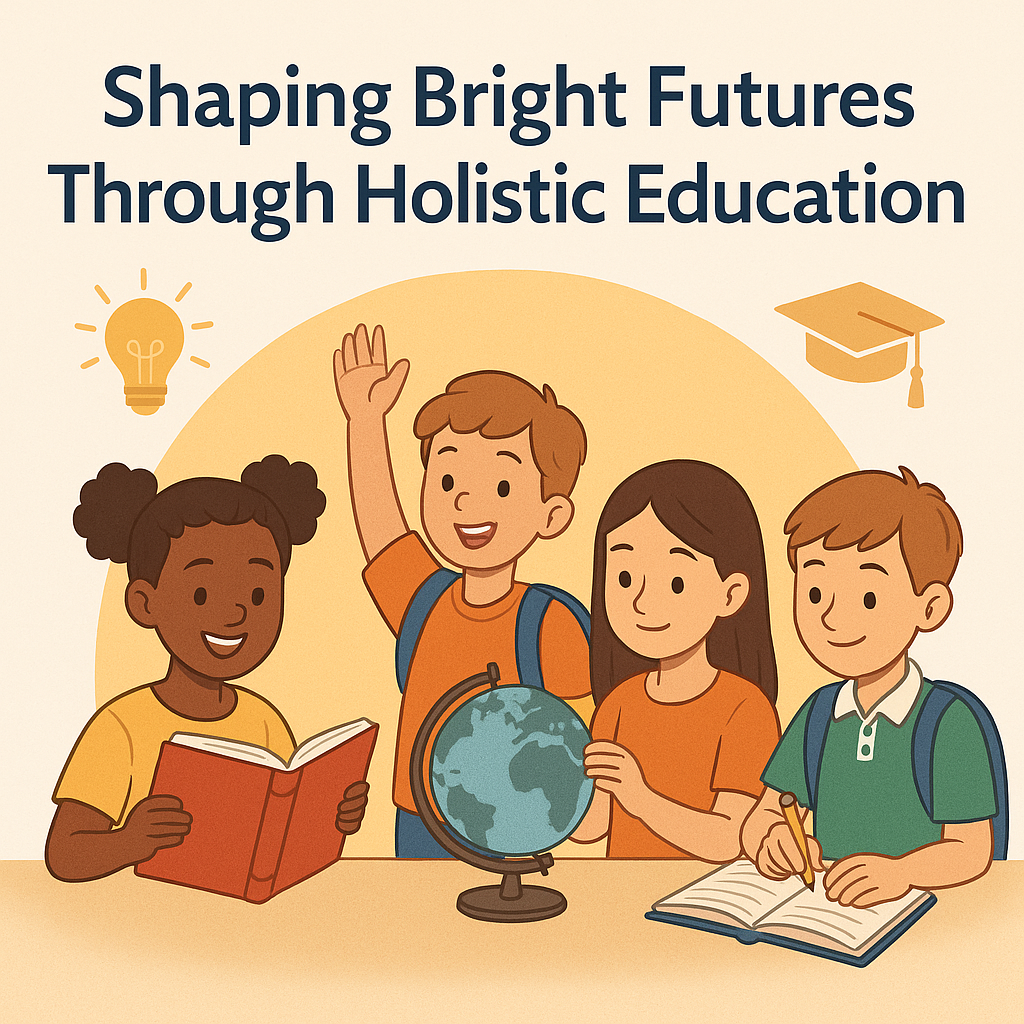
Education is not merely the transmission of academic knowledge; it is the foundation upon which individuals build their character, values, and life skills. Holistic education is an approach that nurtures all aspects of a student’s development—intellectual, emotional, social, physical, and spiritual. By embracing this well-rounded method, educators can shape bright futures for students, preparing them not only for exams but for life itself.
At the heart of holistic education lies the belief that each child is unique, with different talents, interests, and learning styles. This approach encourages schools to go beyond textbooks and embrace creative teaching methods that promote curiosity, critical thinking, and problem-solving. Students are not just passive learners; they are active participants in their educational journey, exploring their potential and discovering their passions.
Holistic education also emphasizes emotional intelligence and mental well-being. Activities like mindfulness, art, music, sports, and group discussions help students express themselves and build resilience. By fostering empathy, respect, and teamwork, students learn to navigate relationships and challenges with confidence and compassion. These soft skills are just as essential as academic achievements in today’s fast-changing world.
Furthermore, holistic education integrates moral and ethical values into the curriculum. Students are encouraged to understand the importance of honesty, responsibility, and kindness. Such values create socially aware citizens who contribute positively to their communities. Education becomes a tool not just for personal success but for social progress.
Physical development is another crucial pillar of holistic education. Regular physical activity enhances not only health but also focus, discipline, and self-esteem. Balanced growth requires attention to the body as much as the mind and heart.
In the modern era, where technology and society are rapidly evolving, holistic education equips students with lifelong skills such as adaptability, creativity, and leadership. It transforms schools into nurturing environments where every learner is seen, heard, and valued.
In conclusion, shaping bright futures through holistic education means developing students who are not just academically competent but emotionally balanced, ethically grounded, and socially responsible. By focusing on the whole child, educators can unlock the full potential of each learner and pave the way for a better future for all.