
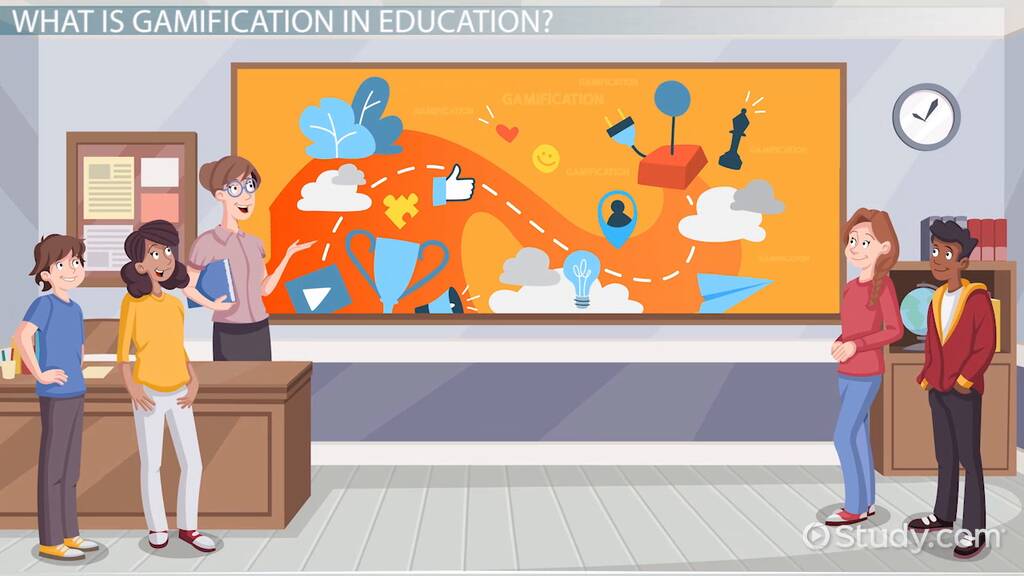
In recent years, gamification has gained significant attention in education as an innovative approach to enhance student engagement and learning outcomes. Gamification refers to the incorporation of game elements such as rewards, challenges, leaderboards, and storytelling into non-game contexts like education. By leveraging the principles of motivation and competition, gamification makes learning more interactive, enjoyable, and effective. This essay explores the role of gamification in education, its benefits, and potential challenges.
One of the primary benefits of gamification in education is increased student engagement. Traditional teaching methods often struggle to capture students’ attention for extended periods. However, by introducing elements like points, badges, and progress tracking, gamification fosters a sense of achievement and encourages students to stay focused. Interactive learning experiences, such as quizzes, role-playing scenarios, and educational video games, create an immersive environment where students actively participate rather than passively absorb information.
Furthermore, gamification enhances motivation by tapping into intrinsic and extrinsic rewards. Intrinsic motivation arises when students find the learning process enjoyable and rewarding in itself. For example, educational apps like Duolingo use progress tracking and daily streaks to encourage consistent practice in language learning. Extrinsic motivation, on the other hand, is driven by tangible rewards such as certificates or class rankings. By combining both forms of motivation, gamification helps students develop a persistent and enthusiastic approach to learning.
Another advantage of gamification is its ability to promote personalized learning. Different students have unique learning paces and preferences, and gamified educational platforms can adapt to individual needs. Features such as adaptive difficulty levels, personalized feedback, and customized challenges ensure that each student receives an optimal learning experience. This flexibility not only improves academic performance but also fosters a sense of autonomy and self-directed learning.
Additionally, gamification encourages collaborative learning and teamwork. Many educational games and platforms incorporate multiplayer modes or group challenges, where students work together to solve problems. This promotes communication, critical thinking, and cooperative skills, which are essential in real-world scenarios. By fostering a sense of community and shared achievement, gamification enhances social learning and peer-to-peer support.
Despite its numerous benefits, gamification in education also presents certain challenges. One concern is the risk of excessive competition, which may create stress and demotivate students who struggle to keep up with their peers. Educators must design gamified learning experiences carefully to ensure that competition remains healthy and inclusive. Moreover, there is a potential for over-reliance on rewards, where students focus more on earning points rather than understanding the subject matter deeply. Balancing fun elements with meaningful learning objectives is crucial to avoid superficial engagement.
In conclusion, gamification plays a vital role in modern education by increasing engagement, motivation, personalization, and collaboration. While it presents certain challenges, thoughtful implementation can maximize its effectiveness in enhancing learning experiences. As technology continues to evolve, gamification is likely to become an integral part of education, transforming traditional classrooms into dynamic and interactive learning environments.