
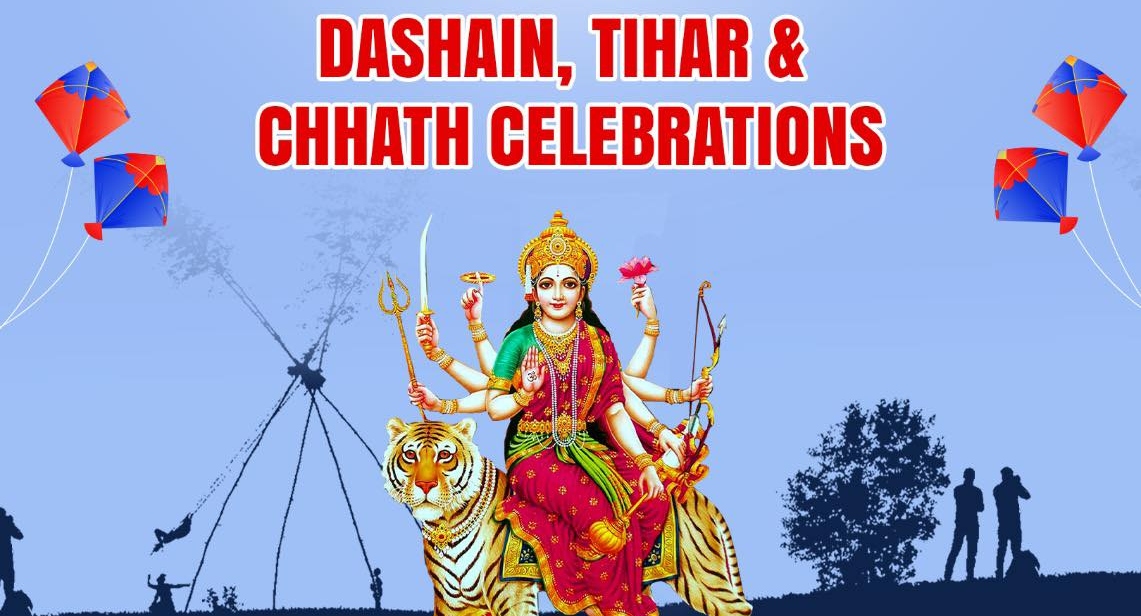
Festivals are the heartbeat of culture and tradition. In Nepal, Dashain, Tihar, and Chhath are three of the most cherished occasions that bring families and communities together. Each festival carries its own meaning, rituals, and beauty, but together they paint a vibrant picture of unity, joy, and spirituality. The celebration of these festivals is not only about religious practices but also about strengthening relationships, sharing happiness, and honoring the connection between people, nature, and the divine.
Dashain: A Festival of Victory and Blessings
Dashain is the longest and most important festival in Nepal. It is celebrated with great enthusiasm across the country. Dashain symbolizes the victory of good over evil, inspired by the mythological triumph of Goddess Durga over the demon Mahishasura. Families gather to worship the goddess, and elders bless younger members with tika and jamara as a sign of love, good health, and prosperity. Homes are cleaned, new clothes are worn, and delicious food is prepared to mark the occasion. The atmosphere is filled with joy as relatives travel long distances to reunite, making Dashain a time of togetherness and harmony.
Tihar: The Festival of Lights and Gratitude
Following Dashain comes Tihar, often called the festival of lights. Tihar is unique because it honors not only gods and goddesses but also animals such as crows, dogs, and cows, which play important roles in daily life and culture. Houses and streets glow with oil lamps, candles, and colorful rangoli designs, creating a beautiful and festive environment. During Tihar, brothers and sisters celebrate their bond on the day of Bhai Tika, when sisters apply tika on their brothers’ foreheads and pray for their long life and happiness. The exchange of gifts and blessings strengthens family ties, while the joyous sounds of deusi and bhailo songs echo through villages and towns.
Chhath: A Festival of Devotion and Nature
Chhath is celebrated mainly in the Terai region, but its importance is felt across Nepal. It is dedicated to the Sun God, who is believed to sustain life on Earth. Devotees observe strict fasting, purity, and rituals to thank the Sun for energy and prosperity. They gather on riverbanks and ponds to offer prayers during sunrise and sunset, creating an atmosphere of devotion and serenity. Chhath is not only about religious faith but also about respecting nature and recognizing the essential role of the sun in human life. The sight of devotees standing in water, holding offerings in bamboo baskets, is both powerful and inspiring.
The Common Thread of Togetherness
Though Dashain, Tihar, and Chhath are different in their rituals, they share a common spirit of unity, gratitude, and joy. They remind us of the importance of family, respect for nature, and devotion to the divine. These festivals bring people from diverse backgrounds together, making them a symbol of Nepal’s cultural richness.
Celebrating the colors of Dashain, Tihar, and Chhath means more than enjoying traditions. It is about carrying forward values of love, respect, and harmony. As generations celebrate these festivals, they pass down not only rituals but also the lessons of unity and resilience that keep society strong.