
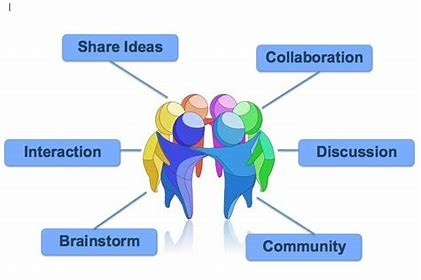
In today’s modern education system, the role of the teacher is not limited to delivering lectures while students quietly listen and take notes. Learning has become more interactive, dynamic, and student-centered. Among the many effective teaching methods, group learning also known as cooperative learning has proven to be one of the most powerful tools in developing academic knowledge, communication skills, and social understanding among students.
What is Group Learning?
Group learning is a teaching method where students work together in small teams to achieve a shared learning goal. Whether it’s solving a maths problem, conducting a science experiment, preparing a presentation, or discussing a story, group learning allows students to collaborate, communicate, and think critically.
Academic Benefits
When students work in groups, they learn to exchange ideas and explain concepts to one another. A student who may struggle to understand a topic in a lecture might grasp it better when a classmate explains it in simple language. At the same time, students who teach their peers strengthen their own understanding. This two-way benefit deepens learning and helps students perform better in assessments.
Group work also improves critical thinking and problem-solving. Rather than memorizing answers, students discuss different possibilities, evaluate each other’s opinions, and reach conclusions together. This active engagement builds stronger thinking skills than passive note-taking.
Social and Emotional Benefits
Beyond academic advantages, group learning develops important life skills. Students learn how to listen respectfully, give constructive feedback, divide tasks fairly, and handle disagreements maturely. These skills are crucial in everyday life, future workplaces, and relationships.
Working in a team also boosts self-confidence. Students who are shy in whole-class settings often feel more comfortable sharing their thoughts in a small group. Over time, this helps them become more confident speakers and active participants in the classroom.
Teacher’s Role
The teacher plays a vital role in group learning. Instead of being the center of all instruction, the teacher becomes a guide or facilitator, observing how students interact, helping when needed, and ensuring that every group member contributes. Clear instructions, fair grouping, and structured tasks are important for successful group learning.
Challenges and Solutions
Group work can sometimes be challenging. Some students may not contribute equally, while others may dominate discussions. To avoid such issues, teachers can assign specific roles to each group member such as leader, note-taker, timekeeper, and presenter. Rotating these roles gives everyone a chance to build different skills.
Real-World Preparation
Group learning mirrors real-world situations. In most careers, people work in teams, communicate with colleagues, solve problems together, and support one another. By practicing group learning in school, students are better prepared for such environments in the future.
Conclusion
Group learning is more than just a classroom activity. It is a path to deeper understanding, stronger relationships, and overall personal growth. When students learn together, they grow together. Schools should continue to encourage group learning as an essential part of education. After all, learning is not just about finding the right answers, it’s also about learning how to learn, with and from each other.