
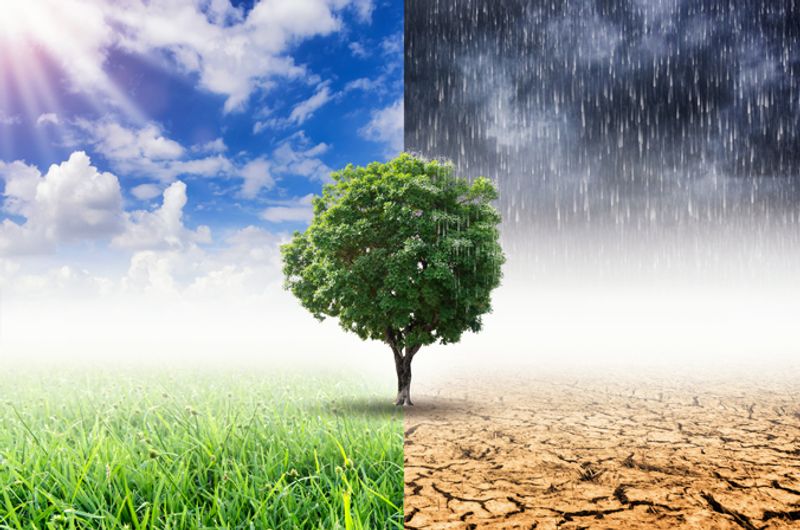
Global warming has emerged as one of the most pressing challenges facing humanity in the 21st century. It refers to the gradual increase in the Earth’s average surface temperature, primarily due to the accumulation of greenhouse gases (GHGs) in the atmosphere. While natural processes do play a minor role, human activities are the dominant force driving this environmental crisis.
The main contributors to global warming are carbon dioxide (CO₂), methane (CH₄), and nitrous oxide (N₂O), which trap heat in the Earth’s atmosphere. These gases are released through activities such as burning fossil fuels for energy, deforestation, industrial processes, and intensive agriculture. The rapid pace of industrialization and urbanization over the last century has significantly increased the concentration of these gases, intensifying the greenhouse effect.
The impact of global warming is visible across the globe. Rising temperatures have led to the melting of glaciers and polar ice caps, causing sea levels to rise and threatening coastal communities. Extreme weather events—such as intense heatwaves, floods, wildfires, and hurricanes—have become more frequent and severe. Additionally, global warming disrupts ecosystems, endangers biodiversity, and affects food and water security, especially in vulnerable regions.
Human influence on the climate is evident not only through emissions but also in land-use changes that affect the Earth’s ability to regulate temperature naturally. For example, deforestation reduces the number of trees available to absorb carbon dioxide, while urban development often replaces natural landscapes with heat-absorbing materials, creating urban heat islands.
However, the global response to this threat is growing. International agreements such as the Paris Agreement aim to limit global warming to well below 2°C above pre-industrial levels. Nations are increasingly investing in renewable energy sources, improving energy efficiency, and implementing policies to reduce emissions. Additionally, reforestation efforts, climate education, and sustainable development practices are gaining momentum.
Despite these positive steps, the pace of action must accelerate. Governments, industries, and individuals all have a role to play. Strong political will, technological innovation, and global cooperation are essential to mitigate the impacts of climate change. Public awareness and behavioral changes, such as reducing energy consumption and supporting eco-friendly initiatives, can also contribute to meaningful progress.
In conclusion, global warming is not a distant threat—it is a present and escalating danger. Understanding the human influence behind it and responding with urgency and responsibility is crucial for safeguarding the planet for future generations.